
Dental Implants
What are Dental Implants?
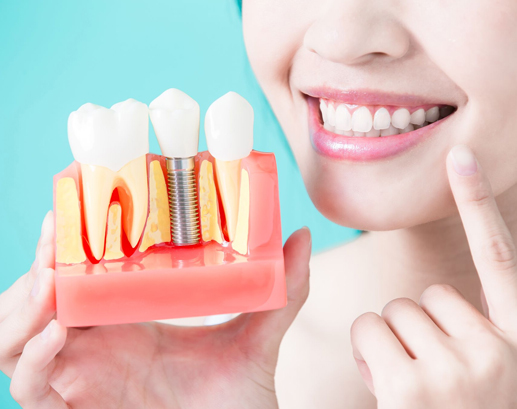
An implant is a dental restoration that is meant to replace missing teeth within the mouth. The implant is made of titanium and is meant to replace both the upper and lower portion of the missing tooth. Implants are long-term solutions to many dental problems, since they can last for decades. You will find that the implant procedure is quick, easy and provides you with a full and healthy smile.
Why would Dental Implants be needed?
You might want or even need an implant because you are missing a tooth. Single implants can be placed to replace one tooth at a time. Multiple implants can be inserted to replace many teeth at once. In fact, some patients want to have their dentures supported by implants, which provides them with a more secured fit. Regardless of how implants are used, they are a great way to perfect and fill your smile in a permanent manner.

Who is a candidate for Dental Implants?
Most of the patients who want implants can safely have the procedure done in our office. Surgery is done to insert the titanium implant post into the jawbone. Because of this, you need to have solid and healthy bone structure in order for the implants to heal properly. Over time, these implants will actually fuse with the bone and become a part of your smile.
What happens during the Dental Implant procedure?
The procedure will begin with anesthetic or sedative administered to improve your comfort. Dr. Sylvie Lam will then create an incision through the gums and insert the implant post deep into the bone. Over the next few weeks and months, you will come in regularly so that we can check on your implant to ensure that it is healing properly. Once healed, we will place a crown, bridge or full denture on the abutment of the implant to fill in your smile.
If you would like to come into our office for implants, call us today so that we can get you into our comfortable spa-like practice.
Frequently Asked Questions
Dental implants are typically made from medical-grade titanium, a biocompatible material that integrates with natural bone. Titanium provides strength, stability, and long-term durability while minimising the risk of rejection or allergic reaction.
Implants are surgically positioned into the jawbone under local anaesthesia or sedation. After placement, the implant gradually integrates with the surrounding bone during a healing process called osseointegration.
Single implant placement usually takes one to two hours, depending on complexity. Surgical time varies based on bone condition, number of implants, and whether additional procedures are required.
Healing typically takes three to six months. During this period, the implant bonds securely with the jawbone, creating a stable foundation for the final crown or prosthetic restoration.
Osseointegration is the biological process where the implant fuses directly with the surrounding jawbone. This integration creates a strong, stable base capable of supporting normal biting and chewing forces.
Smokers may qualify for implants, but smoking increases the risk of healing complications and implant failure. A detailed consultation helps evaluate individual risk and determine suitability.
Implant failure is uncommon but may occur due to infection or inadequate integration. In many cases, the implant can be removed, the site treated, and replacement considered after healing.
Yes, implant crowns are custom fabricated to match surrounding teeth in shape, size, and color. This ensures natural appearance, functional bite alignment, and long-term durability.
Yes, implants stimulate the jawbone through functional chewing pressure. This stimulation helps maintain bone density and reduces progressive bone deterioration associated with missing teeth.
Costs vary depending on implant number, bone condition, and restoration type. A consultation provides accurate evaluation, imaging, and a detailed cost estimate based on individual treatment needs.